The Role of Teachers in Student Success

Introduction
Education is one of the most powerful tools for shaping a better future. At the center of this transformation stands the teacher. The role of teachers in student success goes far beyond delivering lessons. Teachers inspire curiosity, build confidence, guide personal development, and help students overcome challenges.
A supportive and skilled teacher can transform a struggling learner into a confident achiever. Research consistently shows that teacher quality is one of the most important factors affecting academic performance.
In this article, we explore how teachers influence student achievement, supported by research, statistics, and practical strategies.
Understanding the Role of Teachers in Student Success
Teachers play a central role in shaping a student's academic journey and personal growth. Their responsibilities extend beyond instruction to include mentorship, motivation, and emotional support.
Key responsibilities include:
- Delivering structured learning experiences
- Encouraging critical thinking
- Supporting individual learning needs
- Providing constructive feedback
- Building confidence in students
A teacher's influence can determine whether students develop a love for learning or struggle with disengagement.
How Teachers Influence Academic Achievement
Research consistently shows that teacher effectiveness is one of the strongest predictors of student success.
Teachers influence students by:
1. Creating a Positive Learning Environment
A supportive classroom environment increases student participation and learning motivation.
2. Providing Clear Instruction
Effective teachers break complex concepts into understandable lessons.
3. Encouraging Critical Thinking
Teachers guide students to analyze, question, and explore ideas.
4. Providing Continuous Feedback
Constructive feedback helps students improve their performance.
Key Qualities of Effective Teachers
Successful teachers share several important qualities that directly impact student outcomes.
1. Strong Communication Skills
Clear communication helps students understand concepts easily.
2. Patience and Empathy
Students learn at different speeds. Effective teachers adapt their methods accordingly.
3. Passion for Teaching
Passionate teachers inspire students to stay motivated.
4. Adaptability
Teachers must adjust teaching methods based on students' learning styles.
5. Leadership and Guidance
Teachers act as mentors who guide students toward academic and personal success.
Teaching Strategies That Improve Student Success
Teachers who apply effective instructional strategies can significantly improve student outcomes.
Active Learning
Students engage directly in the learning process through:
- discussions
- group work
- problem-solving activities
Personalized Learning
Teachers adapt lessons according to individual student needs.
Project-Based Learning
Students learn by working on real-world problems and projects.
Continuous Assessment
Frequent assessments help teachers track progress and provide timely support.
Teacher-Student Relationships and Motivation

One of the most important factors in student success is the relationship between teachers and students.
Students perform better when they feel:
- respected
- supported
- understood
A positive relationship increases:
- classroom participation
- academic confidence
- emotional well-being
Teachers who build trust with students create a safe learning environment that encourages growth.
Technology and Modern Teaching Methods
Modern education increasingly integrates technology to enhance learning.
Teachers now use tools such as:
- online learning platforms
- educational videos
- digital simulations
- interactive quizzes
These technologies help make lessons more engaging and accessible.
Challenges Teachers Face in Supporting Students
Despite their crucial role, teachers face many challenges.
Common challenges include:
- large classroom sizes
- limited resources
- diverse student learning abilities
- administrative workload
- technological adaptation
Addressing these challenges requires support from schools, governments, and communities.
Teacher Influence on Student Success (Estimated Impact)
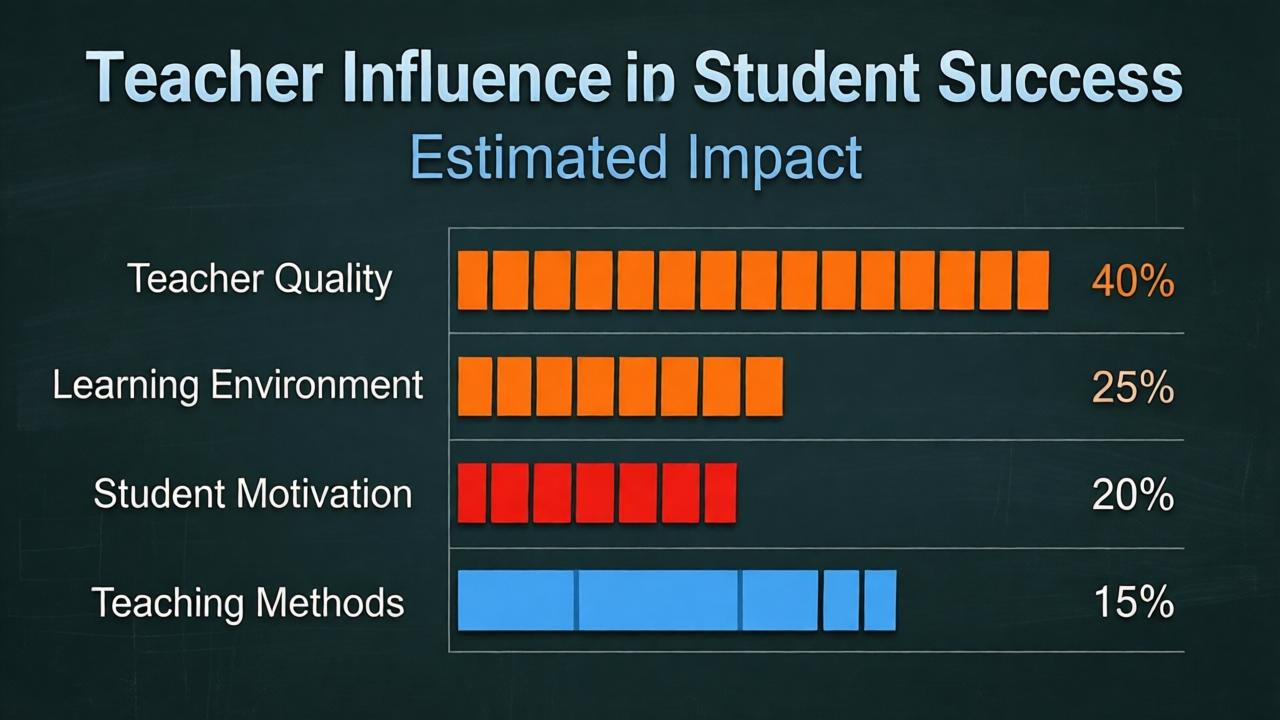
This visualization highlights how teacher quality has the largest impact on student success.
- Graphical Data Section To visualize the role of teachers in student success, consider this barometer of influences from John Hattie's research, showing teacher effects in the "Zone of Desired Effects" for accelerating learning.
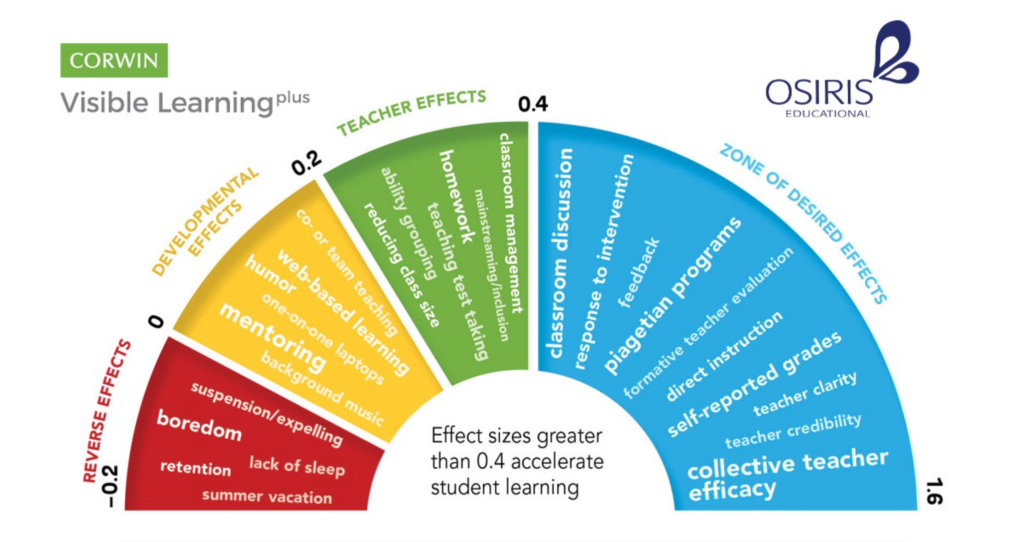
Hattie's Barometer of influence - Infographic - VISIBLE LEARNING
Caption: Hattie's Barometer of Influence on Student Achievement ALT Text: Infographic illustrating effect sizes on student learning, highlighting teacher clarity, credibility, and efficacy.
Additionally, here's a chart depicting student support differences by performance levels during remote learning, underscoring teacher availability's role.
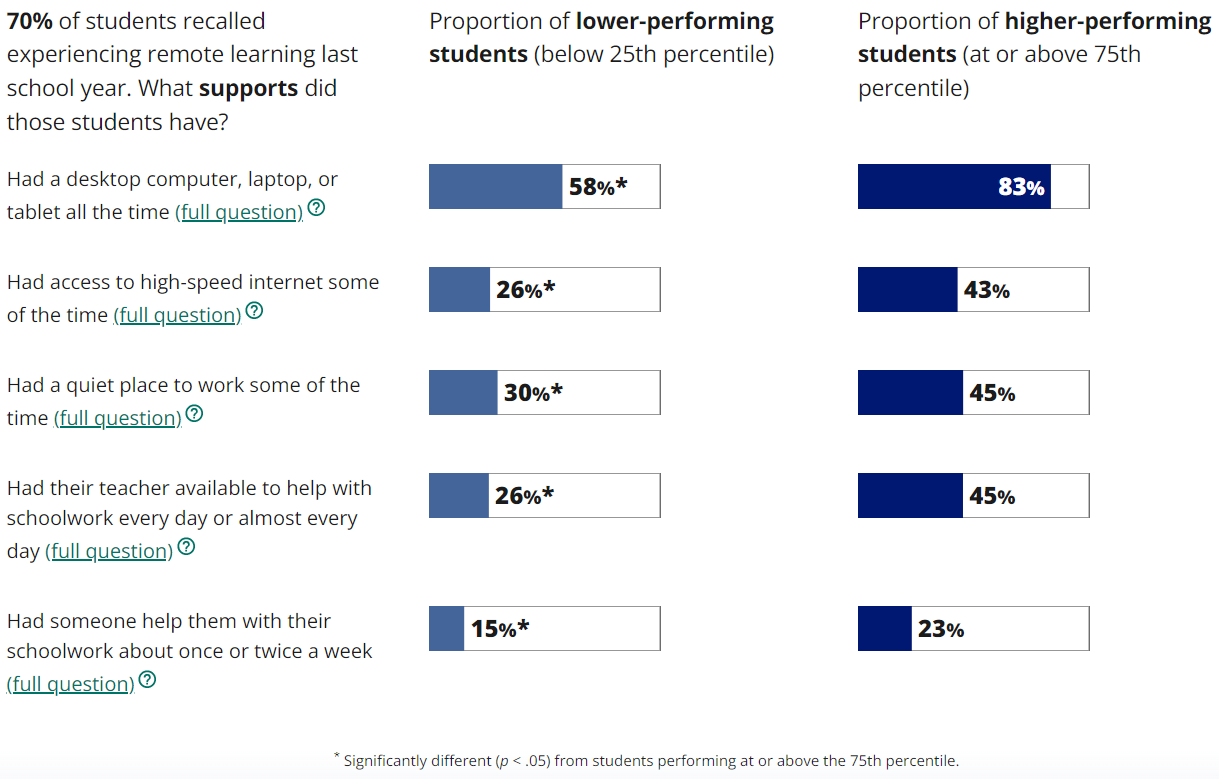
Fast Facts: Long-term trends in reading and mathematics achievement (38)
Caption: Proportion of Students with Various Supports by Performance Percentile ALT Text: Bar chart comparing lower and higher-performing students' access to devices, internet, quiet spaces, and teacher help.
- Image Suggestions
- Feature Illustration Prompt: "A diverse group of students in a vibrant classroom, with a smiling teacher guiding a student at a desk, surrounded by books and digital tools; realistic style, warm colors."
- Suggested Caption: Teacher Mentoring Students in Action
- ALT Text: Teacher helping diverse students learn in classroom
- Concept Diagram Prompt: "Diagram showing a teacher's influence branching into academic, emotional, and social student outcomes, with icons for growth mindset, test scores, and relationships; flowchart style."
- Suggested Caption: Teacher Impact Framework
- ALT Text: Flowchart of teacher's role in student success areas
- Workflow Graphics Prompt: "Step-by-step infographic of a teacher's daily routine: planning lessons, engaging students, providing feedback, and assessing progress; colorful icons and arrows."
- Suggested Caption: Teacher's Workflow for Student Success
- ALT Text: Infographic of teaching steps enhancing student achievement
Additionally, embed these searched images in the article:

Mentor Teacher Credentials | TASB
Caption: Group Learning with Teacher Guidance; ALT: Teacher assisting group of children in class.

Mentor Program Allotment | Texas Education Agency
Caption: Digital Mentoring in Modern Classroom; ALT: Teacher helping students with tablets.

What Are Teacher's Future Roles? — the Learning Counsel
Caption: Future Teacher Roles Infographic; ALT: Wheel diagram of evolving teacher responsibilities.
Conclusion
The role of teachers in student success is fundamental to education and personal development. Teachers influence academic performance, inspire motivation, and help students develop critical life skills.
Research clearly shows that effective teaching significantly improves learning outcomes. By fostering supportive learning environments, adopting modern teaching strategies, and building strong relationships with students, teachers can shape the future of individuals and society.
Investing in teacher development, training, and resources is essential for improving education systems worldwide. When teachers succeed, students succeed—and when students succeed, society thrives.