The Earliest Written Source: a Bishop Writing in 634–640 CE
Almost everything we think we know about the historical Muhammad comes from Muslim sources written 150–300 years after his death. The Qur’an barely mentions him. The great biographies (Sīra) and Hadith collections appear only in the 8th–9th centuries.
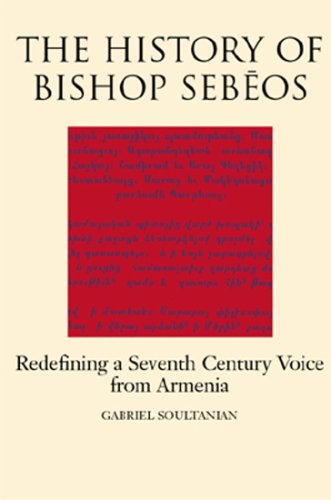
The very first surviving written witness to Muhammad’s existence comes instead from an Armenian Christian bishop named Sebeos, writing in the late 630s — within living memory of the Prophet’s death in 632 CE.
Here is the passage in full (c. 660 CE, but based on sources from 634–640):
“At that time a certain man from among those same sons of Ishmael whose name was Mahmet [Maḥmad], a merchant, as if by God’s command appeared to them as a preacher and the path of truth. He taught them to recognize the God of Abraham, especially because he was learned and informed in the history of Moses. Now because the command was from on high, at a single order they all came together in unity of religion. Abandoning their vain cults, idolatrous cults, they turned to the living God who had appeared to their father Abraham. So Mahmet legislated for them: not to eat carrion, not to drink wine, not to speak falsely, and not to engage in fornication. He said: ‘With an oath God promised this land to Abraham and his seed after him forever… Now you are the sons of Abraham, and God is accomplishing his promise to Abraham and his seed for you. Love sincerely only the God of Abraham, and go and seize your land which God gave to your father Abraham. No one will be able to resist you in battle, because God is with you.’”
This is it — the oldest non-Muslim reference to Muhammad and the birth of Islam, written while many eyewitnesses were still alive.
Why This Document Matters
- Confirms Muhammad was a real historical person No later legend. A hostile outsider writing within 5–8 years of Muhammad’s death already knows his (nick)name, profession, and core message.
- Shows Islam began as an Abrahamic revival movement Sebeos correctly identifies the central idea: the Arabs are the forgotten descendants of Abraham through Ishmael and are now reclaiming their divine inheritance from the Byzantines and Persians.
- Records the earliest known version of the Islamic “call to arms” The promise of the land “from the Nile to the Euphrates,” the prohibition of wine and fornication, and the assurance of divine military victory — all appear here decades before any surviving Muslim texts.
- Frames Muhammad as a new Moses The parallel is explicit: just as Moses led the children of Israel out of bondage to reclaim the Promised Land, “Mahmet” leads the children of Ishmael to reclaim theirs. This Mosaic template would become the dominant self-understanding of early Islam.
- Written by an enemy, yet remarkably accurate Sebeos is no admirer — he sees the Arab conquests as a divine punishment on sinful Christians — but he gets the theology and chronology essentially right, which makes his testimony invaluable.
In short, the very first time the pen of history touches Muhammad, it is not the pen of a believer, but of an anxious Christian bishop watching the world’s greatest empires collapse before desert warriors who claimed to be the true sons of Abraham.
That single paragraph, written between 634 and 640 CE, is the birth certificate of Islam in the historical record.
Comments (Write a comment)
Showing comments related to this blog.