❮ Go Back
The Importance of Digital Literacy for Students
2026-03-07 - 08:13 am
The Importance of Digital Literacy for Students

Introduction
In an era where artificial intelligence shapes job markets and online interactions define social connections, digital literacy for students has become more than a skill—it's a necessity. According to a 2025 EDUCAUSE report, 92% of U.S. jobs now require digital skills, yet nearly a third of the workforce lacks basic proficiency. This gap highlights a critical issue: without strong digital literacy, students risk being left behind in education, careers, and society.
This is where digital literacy for students becomes crucial. Digital literacy refers to the ability to find, evaluate, create, and communicate information using digital technologies. It includes skills such as critical thinking, online safety, digital communication, and responsible technology use.
In the 21st century, digital literacy is no longer optional—it is a fundamental skill that helps students succeed academically, professionally, and socially.
Visua: Digital Literacy Skills for Students
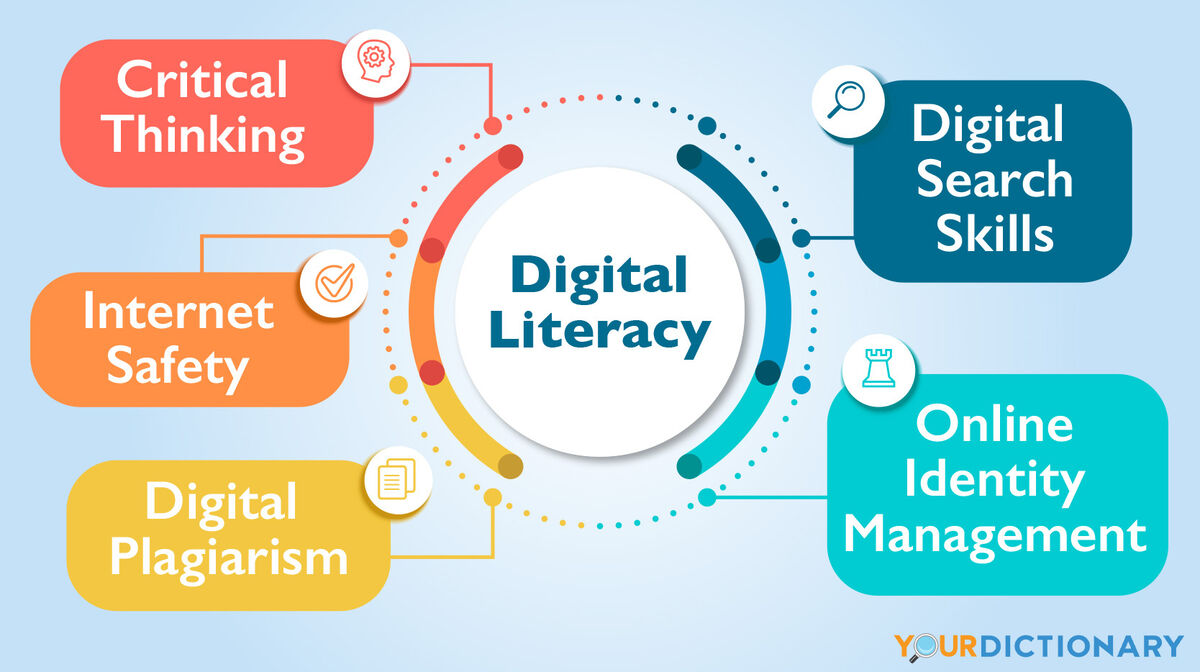
Caption: Key digital literacy skills include critical thinking, internet safety, communication, and responsible technology use.
Alt Text: Digital literacy skills infographic showing critical thinking, internet safety, and digital communication for students
What Is Digital Literacy?
Digital literacy refers to the ability to use technology effectively to access, evaluate, and create information.
According to UNESCO, digital literacy involves understanding digital tools, evaluating online information critically, and using technology responsibly.
Key Components of Digital Literacy
Students need several digital skills to thrive in a technology-driven world:
- Information literacy
- Online communication skills
- Digital safety and cybersecurity awareness
- Critical thinking and media evaluation
- Responsible digital citizenship
These skills help students navigate the internet safely and efficiently.
Why Digital Literacy Is Important for Students
1. Enhances Learning Opportunities
Digital literacy enables students to access a vast range of educational resources.
Examples include:
- Online courses and tutorials
- Digital libraries and e-books
- Educational videos and podcasts
- Interactive learning platforms
Studies show that 94% of students use online search engines for academic research, highlighting the growing importance of digital learning tools.
2. Improves Critical Thinking
Students must learn how to evaluate online information critically.
Digital literacy teaches students to:
- Identify reliable sources
- Detect misinformation
- Analyze digital content
- Avoid plagiarism
This ability is especially important in an age where misinformation spreads rapidly online.
3. Builds Essential Career Skills
Many modern jobs require strong digital skills.
According to World Economic Forum, digital skills and technological literacy are among the most important competencies for future jobs.
Examples of digital career skills include:
- Data analysis
- Online collaboration
- Digital communication
- Technology troubleshooting
Students who develop digital literacy early gain a competitive advantage in the job market.
4. Promotes Safe Internet Use
Digital literacy also teaches students how to protect themselves online.
Key safety skills include:
- Protecting personal information
- Recognizing cyberbullying
- Avoiding online scams
- Understanding digital privacy
Organizations like UNICEF emphasize digital literacy as an important factor in protecting children online.
Statistics on Digital Literacy in 2026
Recent data paints a clear picture:
- 92% of U.S. jobs require digital skills; 1/3 workforce lacks them.
- U.S. students' computer literacy scores: 482 in 2023 (down from 519 in 2018).
- 86.2% of teachers agree students need critical AI engagement; 58.3% say non-users will be disadvantaged.
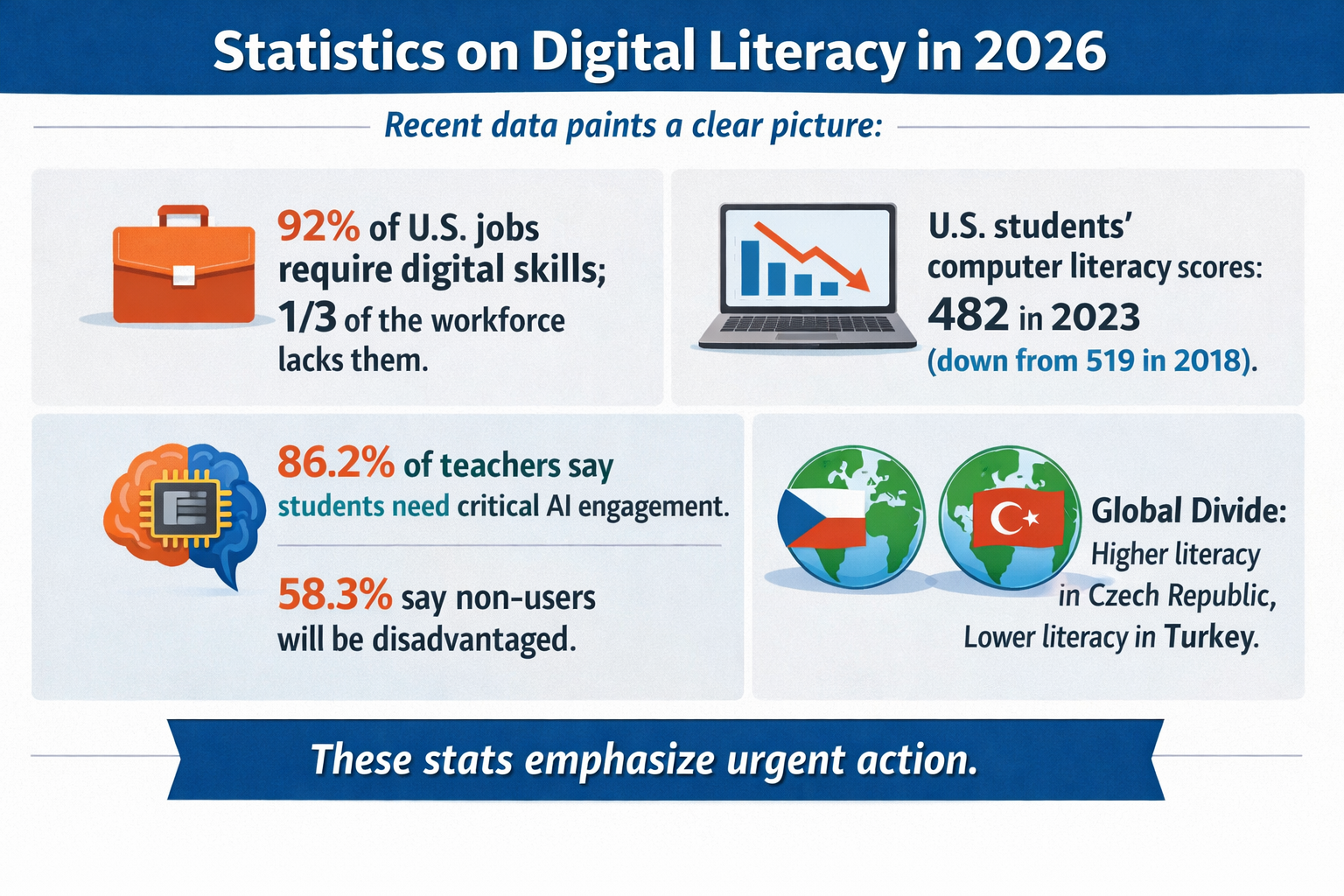
Global divides persist: Higher literacy in countries like Czech Republic vs. lower in Turkey. These stats emphasize urgent action.
Challenges of Digital Literacy
Despite its benefits, students face several challenges in developing digital literacy.
1. Digital Divide
Not all students have equal access to technology or internet connectivity.
2. Misinformation
The internet contains large amounts of inaccurate or misleading information.
3. Cybersecurity Risks
Students may encounter:
- Cyberbullying
- Online scams
- Identity theft
4. Digital Distractions
Technology can sometimes distract students from learning.
Balanced technology use is essential to overcome these challenges.
Case Study: Digital Literacy in Modern Classrooms
Many schools around the world are integrating digital literacy programs into their curricula.
For example:
- Students learn how to evaluate online sources.
- Teachers use digital collaboration tools.
- Schools introduce cybersecurity education.
Research shows that 93% of teachers believe digital resources improve student achievement, demonstrating the positive impact of technology in education.
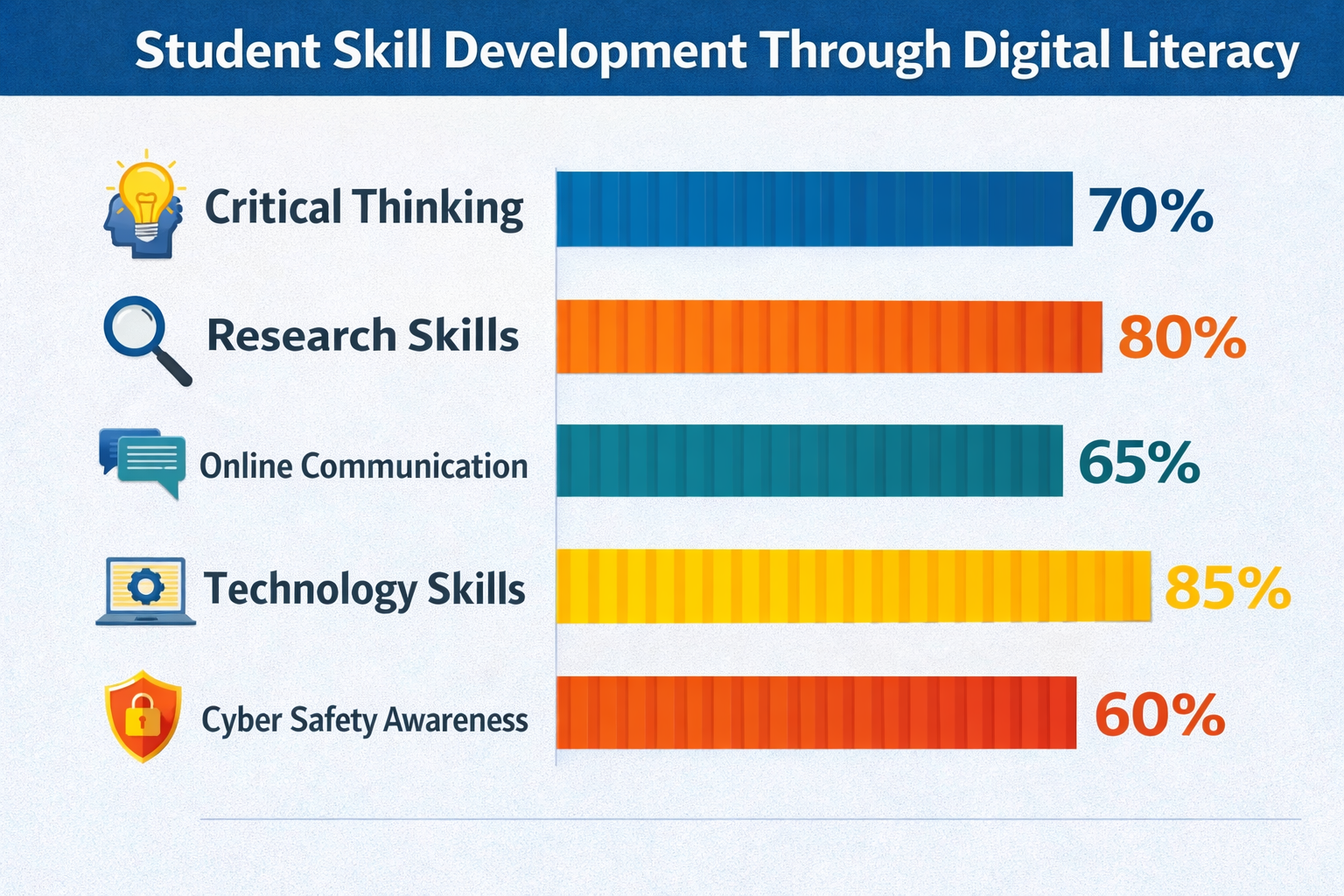
Graph: Impact of Digital Literacy on Student Skills
Explanation
The graph shows how digital literacy improves various student skills. Technology proficiency and research abilities show the highest growth, while communication and cybersecurity awareness also improve significantly.
Strategies to Improve Digital Literacy for Students
Educators and parents can support students in developing strong digital skills.
Recommended Strategies
- Teach students how to verify online information
- Encourage responsible social media use
- Introduce digital citizenship education
- Promote safe internet habits
- Use technology for collaborative learning
Schools should integrate digital literacy into everyday learning activities.
Conclusion
Digital literacy has become an essential skill for students in the modern world. It empowers young learners to access information, communicate effectively, and navigate digital environments safely.
By developing strong digital literacy skills, students can improve their academic performance, enhance creativity, and prepare for future careers. However, it is equally important to address challenges such as misinformation, cybersecurity risks, and digital distractions.
Educators, parents, and policymakers must work together to promote digital literacy in schools. By doing so, we can ensure that students are not just consumers of technology but responsible and empowered digital citizens.
Encouraging digital literacy today will prepare students for a smarter, safer, and more innovative future.
Frequently Asked Questions (FAQs)
1. What is digital literacy for students?
Digital literacy for students refers to the ability to use digital technologies to find, evaluate, create, and communicate information effectively.
2. Why is digital literacy important in education?
Digital literacy helps students develop research skills, critical thinking, online safety awareness, and technological competence.
3. What skills are included in digital literacy?
Digital literacy includes information literacy, digital communication, internet safety, media literacy, and technology problem-solving.
4. How can schools improve digital literacy?
Schools can introduce digital citizenship programs, technology-based learning, and training in evaluating online information.
5. How does digital literacy prepare students for the future?
Digital literacy equips students with essential technological skills needed for modern careers and lifelong learning.
Credible Sources
- UNESCO – Digital Literacy and Education
- https://www.unesco.org
- UNICEF – Children and Digital Learning
- https://www.unicef.org
- World Economic Forum – Future Skills Report
- https://www.weforum.org
- Educational Technology Statistics
- https://elearninginfographics.com/teaching-digital-technologies-infographic/