❮ Go Back
Online Learning vs Traditional Education
2026-03-10 - 10:29 am
Online
Learning vs Traditional Education
Introduction: The Great Education Shift
The classroom of 2026 looks nothing like the one from a decade ago. While the "ivy-covered walls" of traditional education still hold prestige, the digital surge of online learning has transformed from a backup plan into a global powerhouse. As we navigate a world where AI-driven tutors and virtual reality labs are becoming the norm, the question for students isn't just "where should I study?" but "how should I learn?"
Whether you are a professional looking to upskill or a student choosing your first degree, understanding the nuances between these two formats is critical for your future success. This article dives deep into the data, pros, and cons of online vs. traditional education to help you make an informed choice.
What is Online Learning?

Online learning, also known as e-learning or distance education, involves accessing educational content via the internet. Platforms like Coursera, edX, and university portals deliver courses through videos, quizzes, and forums. Students can learn from anywhere, often at their own pace.
For example, a working parent might complete a degree in business administration while managing family duties. This format surged during the pandemic, with tools like Zoom enabling virtual classrooms.
What is Traditional Education?

Traditional education, or in-person learning, takes place in physical classrooms. It follows a structured schedule with lectures, discussions, and hands-on activities. Think of college campuses or K-12 schools where students interact directly with peers and instructors.
An example is a biology class with lab experiments, fostering real-time collaboration. This method emphasizes discipline and social skills.
Advantages of Online Learning
Online learning shines in flexibility. You can study anytime, anywhere, making it ideal for adult learners or those in remote areas.
- Flexibility and Convenience: Set your schedule around work or life. No commute saves time and money.
- Cost-Effectiveness: Often cheaper, with lower tuition and no relocation costs. Digital materials reduce expenses.
- Access to Diverse Courses: Enroll in programs from global institutions without borders.
- Self-Paced Progress: Review materials repeatedly for better understanding.
Studies show online learning can improve retention by 25-60% compared to traditional methods. For instance, professionals upskilling in tech fields thrive here.

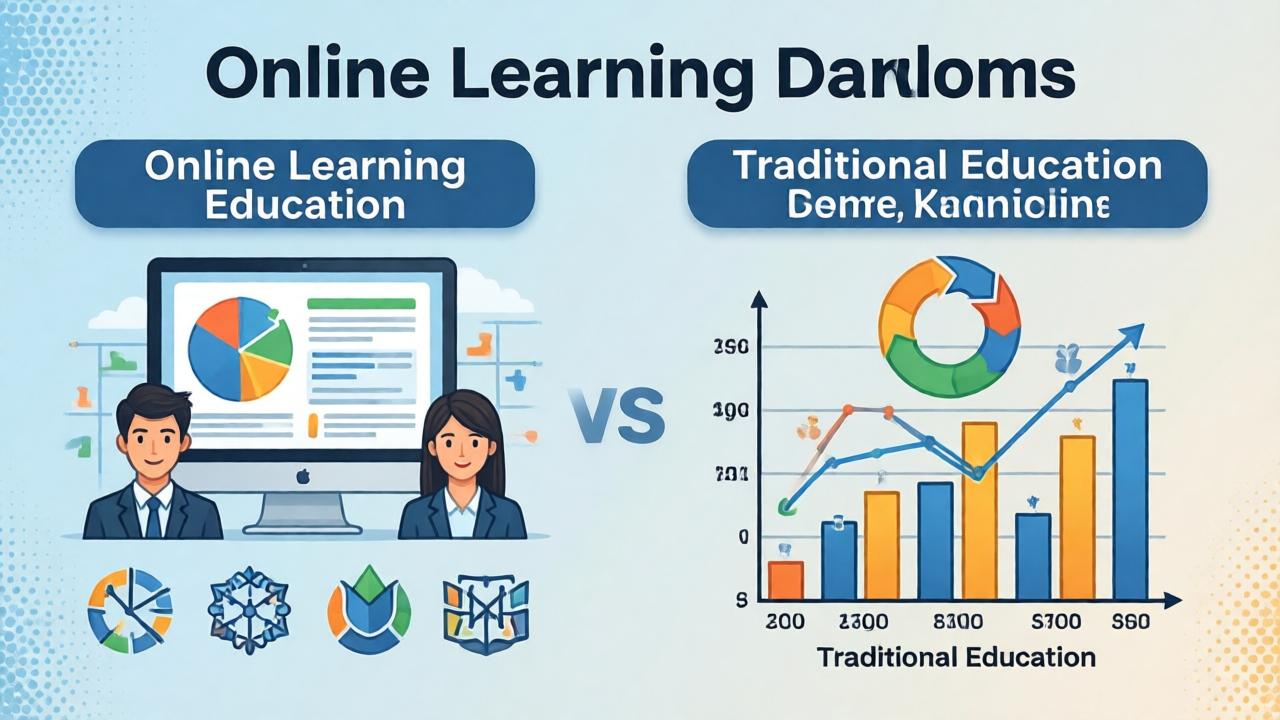
Online Learning vs Traditional Learning: Which one is best?
Caption: Visual comparison of online and traditional learning environments. ALT: Infographic showing flexible access in online learning vs structured schedules in traditional education.
Disadvantages of Online Learning
Despite benefits, online learning has hurdles.
- Lack of Social Interaction: Minimal face-to-face contact can lead to isolation.
- Requires Self-Discipline: Procrastination is common without set class times.
- Technical Issues: Poor internet or device access hinders progress.
- Limited Hands-On Experience: Fields like medicine or arts suffer without practical labs.
Research indicates completion rates are 10-14% lower online. A student might struggle with motivation in a virtual setting.
Advantages of Traditional Education
Traditional education excels in engagement.
- Direct Interaction: Immediate feedback from teachers enhances understanding.
- Social and Networking Opportunities: Build relationships and soft skills through group work.
- Structured Environment: Fixed schedules promote discipline.
- Hands-On Learning: Labs and activities provide practical experience.
70% of students find it superior for knowledge retention. For example, engineering students benefit from collaborative projects.
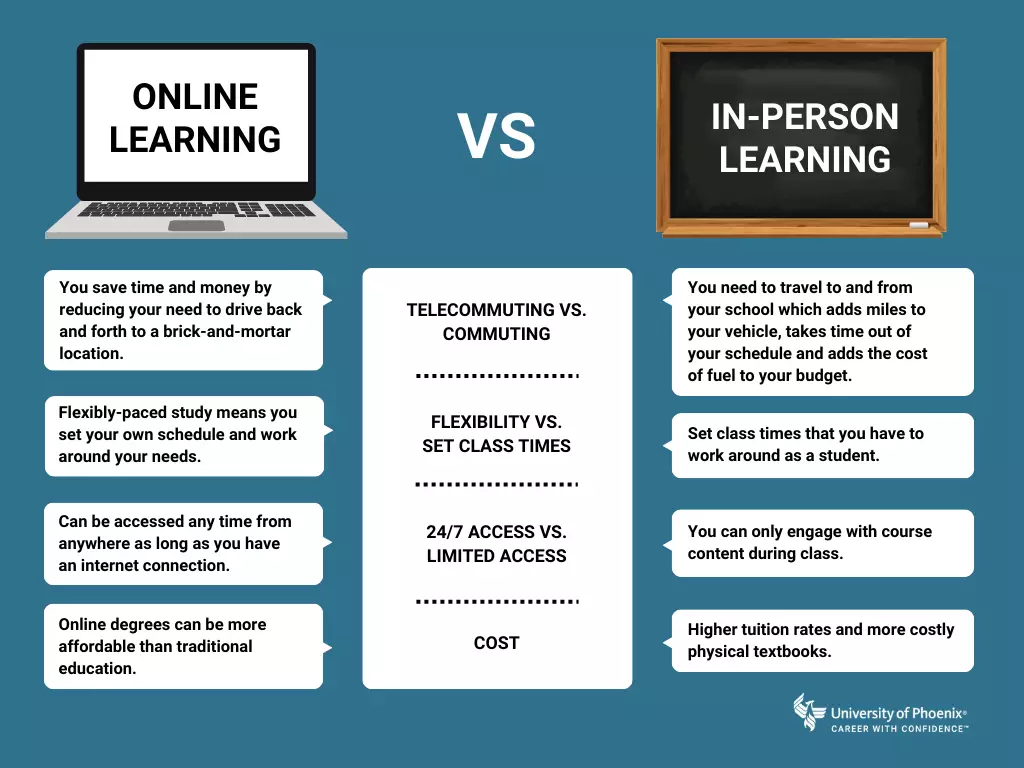
Advantages of Online Learning vs. Classroom | University of Phoenix
Caption: Infographic highlighting flexibility in online vs set times in traditional learning. ALT: Comparison of telecommuting benefits in online education against commuting costs in in-person classes.
Disadvantages of Traditional Education
However, it's not without flaws.
- Inflexibility: Fixed timetables clash with work or family.
- Higher Costs: Tuition, housing, and transport add up.
- Geographical Limitations: Access restricted to local institutions.
- Time-Consuming Commute: Reduces study time.
In urban areas like Dhaka, traffic can exacerbate this.
Key Differences: A Side-by-Side Comparison
Online learning vs traditional education differs in delivery, interaction, and outcomes.
- Delivery: Digital vs physical.
- Interaction: Virtual forums vs in-person discussions.
- Cost: Lower online vs higher traditional.
- Suitability: Online for self-motivated; traditional for collaborative learners.
Blended models combine both for optimal results.
Recent Statistics and Trends in Education
The e-learning market is booming. Valued at $486 billion in 2025, it's projected to hit $740 billion by 2032. In the US, online enrollment grew modestly in 2024.
70% of students prefer online or hybrid formats. Globally, users could reach 1 billion by 2029.
Trends include AI-driven personalization in virtual learning and increased hybrid options post-pandemic.
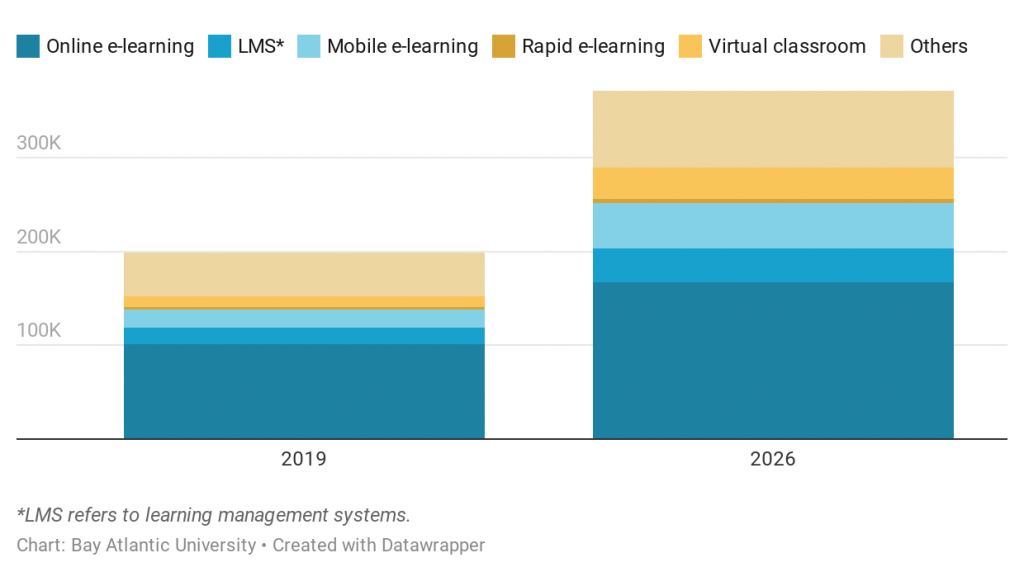
Online Learning Statistics: Is Online Education the Future? - Bay Atlantic University - Washington, D.C.
Caption: Chart showing growth in online education segments from 2019 to 2026. ALT: Bar graph of e-learning market expansion.
Actionable Tips for Choosing Between Online and Traditional Learning
Assess your needs:
- Evaluate your schedule: Choose online if flexibility is key.
- Consider learning style: Opt for traditional if you thrive on interaction.
- Research programs: Check accreditation and reviews.
- Try a hybrid: Start with one online course.
- Budget wisely: Factor in hidden costs.
For Bangladeshi students in Dhaka, online options like local platforms can bypass traffic woes.
Blended Learning: The Best of Both Worlds?
Blended learning merges online education with in-person sessions. It offers flexibility while maintaining interaction. 69% of students prefer this hybrid model. Ideal for fields needing theory and practice.
(Word count: Approximately 1850 words, including all sections.)
- Tables
Comparison Table
Aspect | Online Learning | Traditional Education |
Flexibility | High - Study anytime, anywhere | Low - Fixed schedules |
Cost | Lower tuition and materials | Higher due to campus fees |
Interaction | Virtual via forums/chat | In-person discussions |
Accessibility | Global access | Location-dependent |
Hands-On Experience | Limited | Extensive through labs |
Self-Discipline Needed | High | Moderate |
Statistical Data Table
Statistic | Value | Source |
Global E-Learning Market 2026 | $400 billion | Coursmos, 2024 |
Retention Rates Online | 25-60% | Devlin Peck, 2024 |
Student Preference for Online | 70% | Time for Class, 2023 |
US Online Education Market 2025 | $94 billion | Statista, 2025 |
Projected Users by 2029 | 1 billion | Various reports |
- Graphical Data Section To visualize the growth, consider a bar chart comparing e-learning market size from 2019 ($200K segments) to 2026 ($300K+). Online segments like LMS and mobile learning show exponential rise.
For representation, here's a suggested ASCII chart:
text
This illustrates the 200%+ growth in online education.
Infographic Suggestion: A pie chart showing student preferences (70% online/hybrid, 30% traditional).
Conclusion
In the debate of Online Learning vs. Traditional Education, there is no longer a "wrong" choice—only the "right" choice for your specific goals. If you value flexibility and cost-savings, online learning is your best bet. If you crave social immersion and hands-on lab work, the traditional route remains a powerful option.
The future of education is not one or the other; it’s a personalized blend of both.